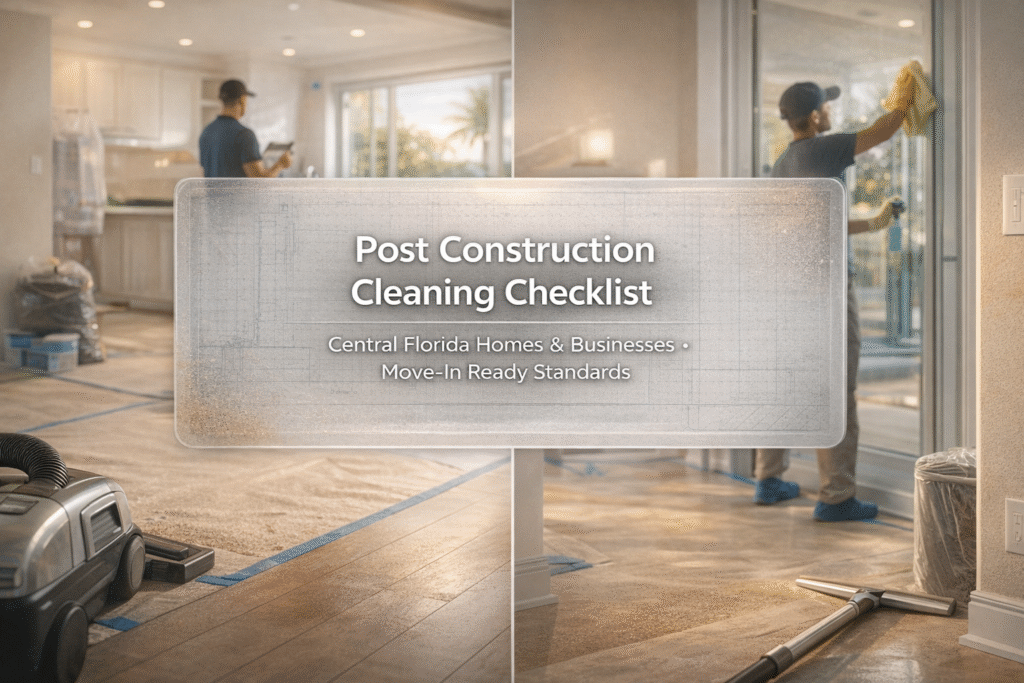
Post Construction Cleaning Checklist: What to Clean First, Next, and Last in Central FL
Use a Central Florida post-construction cleaning checklist to remove debris, control hazardous dust, and document a turnover-ready space. Start with a rough clean: bag and label waste, HEPA-vacuum drywall dust, wipe ledges, and keep PPE on (N95/P100, sealed goggles, nitrile gloves). Schedule your final clean after trades leave and paint cures, ideally within 24–48 hours, then do a touch-up before handoff. Next, you’ll see room-by-room tasks, HVAC steps, and inspection pitfalls.
What is post-construction cleaning (and what’s the difference between rough, final, and touch-up cleaning)?
After the crews wrap up framing, drywall, paint, and installs, you still need post-construction cleaning to remove fine dust, debris, residue, and adhesive films so the space is safe, presentable, and move-in ready.
Use a post-construction cleaning checklist to control scope and verify standards.
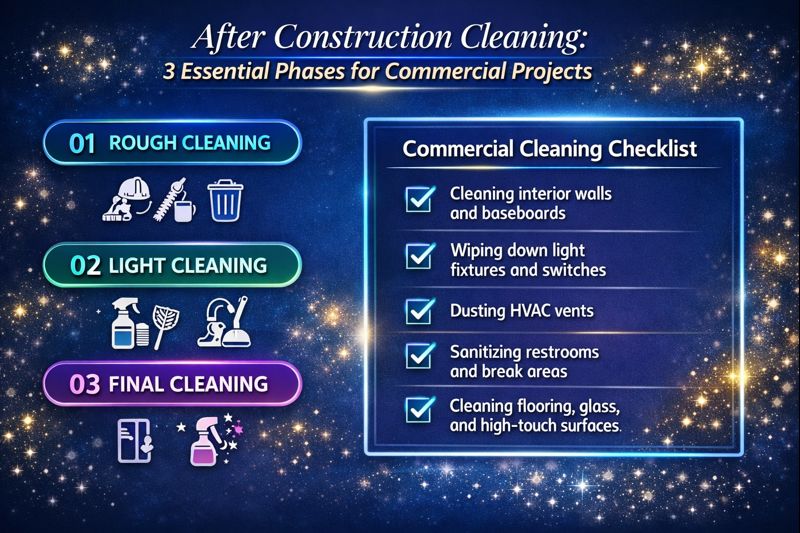
Rough clean vs final clean vs touch-up clean: rough removes bulk debris, labels, and surface rubble; final targets detailed construction dust cleanup on vents, trim, cabinets, fixtures, glass, and floors; touch-up corrects re-settled dust, fingerprints, and smears right before turnover.
Treat post construction deep cleaning as your after remodel cleaning checklist baseline.
When should you schedule post-construction cleaning in Central Florida to avoid dust settling again?
When should you book post-construction cleaning in Central Florida so dust doesn’t resettle and blow your turnover schedule? Schedule it after all trades demobilize, paint cures, and punch-list fixes stop, but before furniture, IT gear, or retail stock moves in.
Lock a 24–48 hour window after final sweeping so drywall dust cleaning can capture airborne fines. Run your post construction cleaning checklist the same day you plan to clean windows after construction to prevent rework.
Coordinate post construction cleaning services central fl to follow the HVAC shutdown/startup plan, then replace the HVAC filter after renovation immediately after cleaning.
What supplies and PPE do you need for safe post-renovation cleanup (dust, debris, and chemicals)?
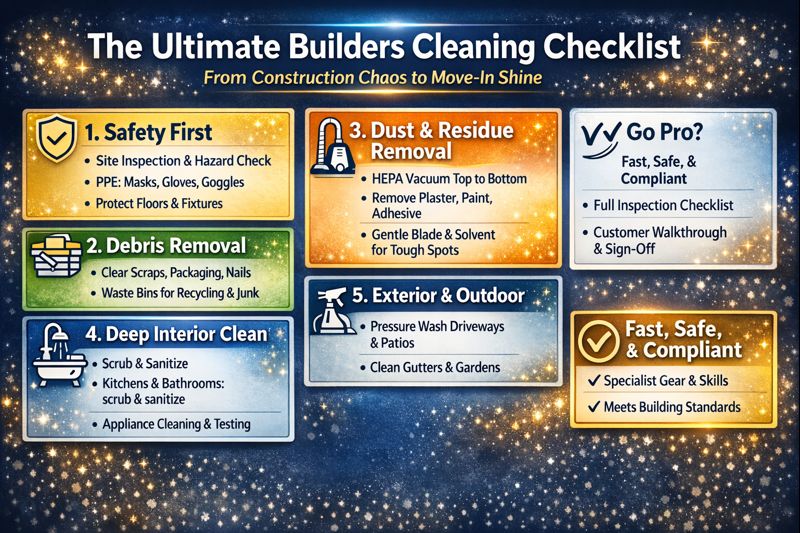
Three things keep post-renovation cleanup safe and compliant—right PPE, dust-control tools, and chemical-ready supplies—so you don’t grind silica or drywall fines into surfaces or expose yourself to irritants.
Wear an N95/P100 respirator, sealed goggles, nitrile gloves, and disposable coveralls; add hearing protection if power tools run nearby.
Use HEPA vacuum attachments, microfiber cloths, tack mats, and labeled contractor bags.
Keep a pump sprayer for light misting, plus neutral cleaner, degreaser, and EPA-registered disinfectant.
Store SDS sheets and guarantee ventilation.
Align supplies with your post renovation cleaning checklist, new construction cleaning checklist, post construction cleaning central florida.
What is the rough clean checklist (debris removal + dust control) before the final clean?
Before you schedule the final clean, run a rough clean that clears hazards, controls dust migration, and sets the site up for inspection-ready results.
Bag and remove all large debris, scrap wood, nails, and packaging; sweep up fasteners with a magnetic broom.
Stage waste by type, label loads, and confirm dumpster rules.
Vacuum drywall dust with HEPA equipment; don’t dry-sweep fine particles.
Wipe ledges, window tracks, and built-ins to drop dust before it spreads.
Replace HVAC filters, seal registers, and run negative air if needed.
Document punch-list items, damage, and missing hardware.
What is the final post-construction cleaning checklist by room (kitchen, bathrooms, bedrooms, living areas)?
How do you know the site’s truly move-in ready after construction dust settles? Use this room-by-room final checklist and document completion.
Kitchen: sanitize countertops, backsplash, sink, and disposal; clean inside/outside appliances; wipe drawers/shelves; mop floors.
Bathrooms: disinfect toilets, tubs, showers, and vanities; polish mirrors; scrub tile/grout; replace liners; mop.
Bedrooms: vacuum carpets/edges; damp-wipe hard floors; wipe closet shelving; remove labels; clean mirrors.
Living areas: dust ceilings/walls lightly; wipe doors/handles; vacuum upholstery; clean interior glass; mop.
Finish: bag trash, reset HVAC, capture photos.
What are the most-missed details that fail inspections (windows, vents, baseboards, cabinets, and fixtures)?
Even if the big debris is gone and the floors look finished, inspectors often fail a space on small, high-visibility misses—especially windows, vents/returns, baseboards, cabinets, and fixtures—where fine construction dust, adhesive residue, paint specks, and fingerprints collect.
You’ll pass faster if you control these details: clean glass edges, tracks, and sills; remove stickers and caulk smears; wipe vent covers and surrounding drywall; detail baseboard tops, corners, and door trim; empty cabinets, vacuum crumbs, and wipe shelves, hinges, and pulls; polish fixtures, remove paint flecks, and confirm every surface is streak-free under bright light.
How should you handle HVAC, air returns, and filters after construction dust in Central FL?
After your build or remodel wraps, treat the HVAC system like a dust-collection path and reset it methodically: shut the system off at the thermostat, remove and bag the old filter(s), vacuum and wipe supply vents and return grilles (including the surrounding wall and frame), then install a fresh MERV-rated filter that matches the unit’s specifications.
Next, run the fan in “On” for 30–60 minutes, then recheck the filter for loading. Replace again within 7–14 days. Keep doors closed during cleanup to limit cross-contamination.
Log dates, filter size, and MERV rating for consistent maintenance.
When is it worth hiring a professional post-construction cleaning crew in Central Florida (and what should be included)?
When your project leaves behind fine dust, adhesive residue, or debris in hard-to-reach areas, hiring a professional post-construction cleaning crew in Central Florida becomes worth it because you’ll get faster turnarounds, safer handling, and a verifiable, room-by-room finish.
Bring a crew in when you need CO/tenant handoff, have silica-heavy dust, or must protect new finishes and warranties.
Require a checklist: HEPA vacuum all horizontals, wet-wipe walls/trim/doors, scrape overspray, clean cabinets inside/out, sanitize baths, degrease kitchens, detail fixtures, clean windows/tracks, remove labels, mop twice, bag debris, and document results.
Choose licensed, insured, trained pros like Top Cleaning FL.
Frequently Asked Questions
How Much Does Post-Construction Cleaning Cost in Central Florida?
In Central Florida, you’ll typically pay $0.20–$0.60 per sq ft or $250–$1,200+ per job. You’ll control cost by documenting scope, debris level, and add-ons; request an itemized, insured quote.
Do You Offer After-Hours or Weekend Cleaning for Businesses?
Yes—you can schedule after-hours and weekend business cleaning. You’ll choose the days, time windows, scope, and access plan. Our licensed, insured team follows your checklist, confirms completion, and adjusts service based on feedback.
Is Your Crew Licensed, Insured, and Background-Checked?
Yes—you’ll get a licensed and insured crew. You’ll also request proof of coverage before we start. You can require background checks for your assigned cleaners, and you’ll confirm access rules, badges, and site protocols.
How Long Does a Typical Post-Construction Clean Take?
You can expect a typical post-construction clean to take 4–12 hours, depending on size and debris. You’ll speed it up by clearing access, confirming scope, and approving add-ons. Your licensed, insured crew follows your checklist.
Can You Remove and Haul Away Leftover Construction Materials and Junk?
Yes—you can, but you’ll need to confirm scope first. You’ll identify materials, secure client approval, then bag, load, and haul junk per local rules. You’ll note exclusions, fees, and disposal receipts for control.
Conclusion
Once you’ve worked through the rough and final checklists, you’re ready to verify the space is truly inspection-ready. Walk each room top-to-bottom, confirm all residues (grout haze, caulk, adhesive, paint) are removed, and re-wipe high-touch points to prevent re-contamination. Check windows, vents, baseboards, cabinets, and fixtures—these often fail final walkthroughs. Replace HVAC filters, clean returns, and document completion. If dust persists, schedule a licensed, insured crew.