
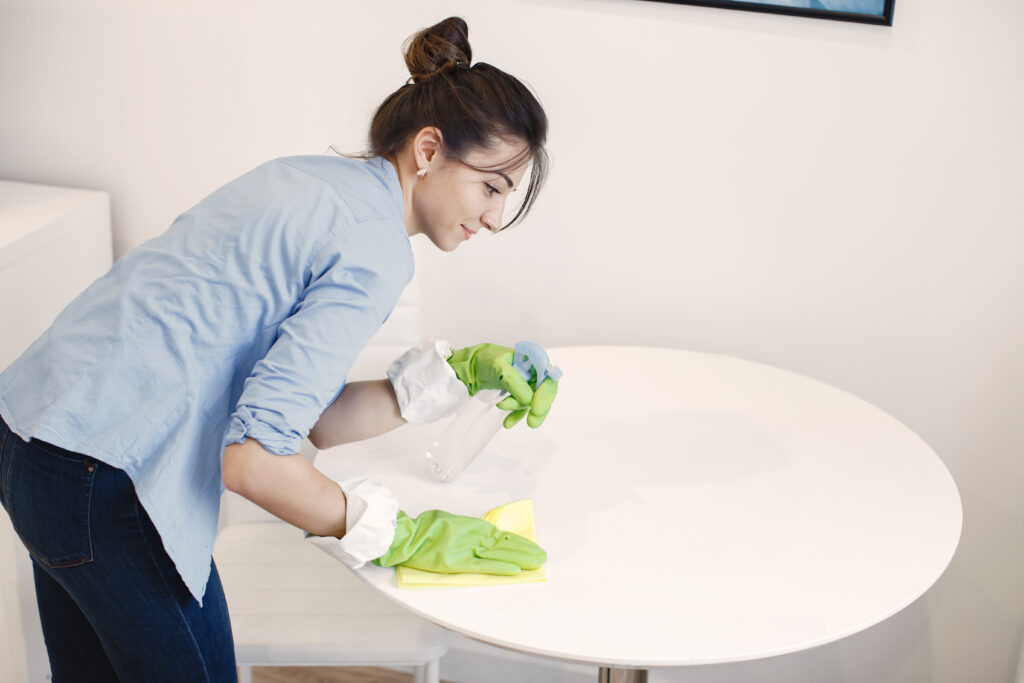
Sticky residue on plastic is one of those small annoyances that gets worse the longer you ignore it. Sticker glue, tape adhesive, food residue, and grease each behave differently — and respond to different treatments.
The good news: most sticky residue on plastic can be removed with things you already have at home. Here’s what works, and when.
Two Rules Before You Start
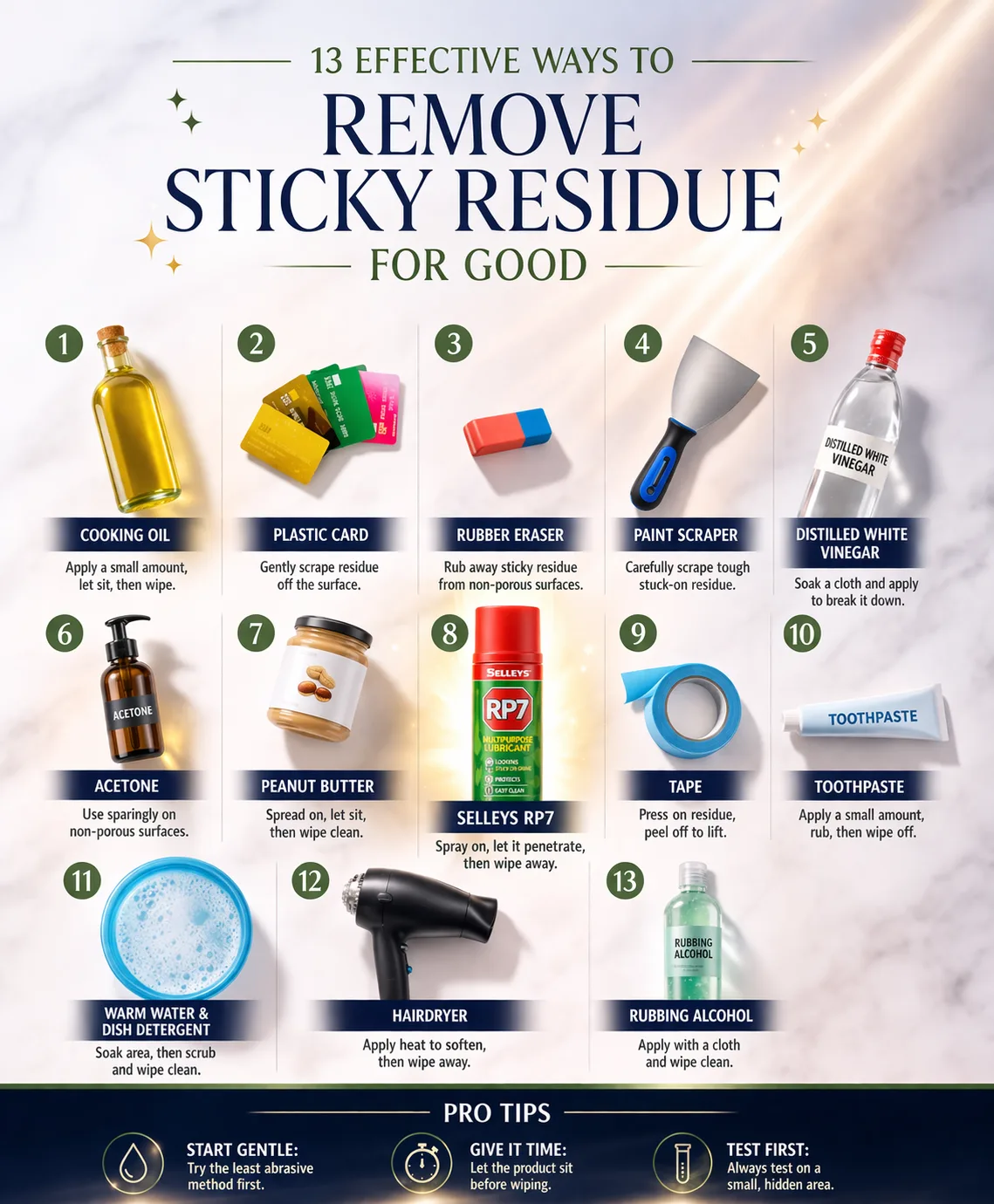
- Never use abrasive scrubbers: Steel wool, rough sponges, and hard brushes will scratch plastic surfaces permanently. Always use a soft cloth, microfibre, or a soft-bristled brush.
- Test first on an inconspicuous spot: Some plastics — particularly older, coloured, or delicate surfaces — can react to alcohol or solvents. Test any cleaning method on a hidden area before going all in.
Removal Methods — By Residue Type
Sticker & Label Adhesive
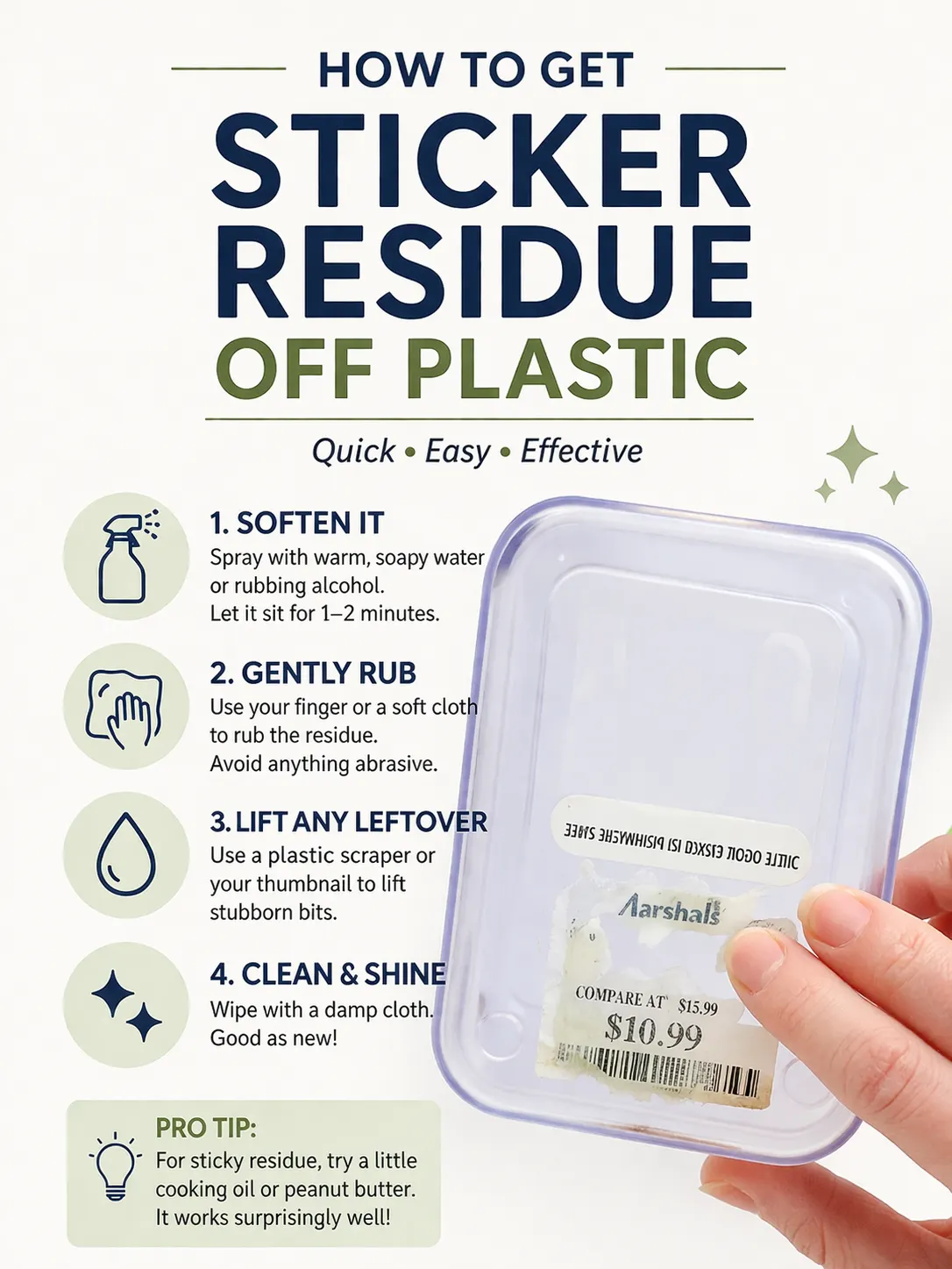
This is the most common type — left behind by price tags, product labels, or packing tape.
- Peel off as much of the sticker as possible first
- Soak a cloth in rubbing alcohol (isopropyl) and press it onto the residue for 30 seconds
- Wipe firmly in one direction — the adhesive should roll off
- For stubborn spots, repeat or use a small amount of Goo Gone
Food & Grease Residue
Common on plastic containers, kitchen utensils, and appliance surfaces.
- Mix a few drops of dish soap into warm water
- Apply with a soft sponge and scrub gently in circular motions
- For hardened residue, make a paste of baking soda and water — apply, leave 5 minutes, then scrub
- Rinse thoroughly with clean water and dry
Tape Residue
Duct tape, masking tape, and packing tape leave particularly stubborn adhesive on plastic.
- Warm the residue with a hairdryer on low heat for 20–30 seconds — this softens the adhesive
- Peel or wipe away immediately while warm
- Follow up with rubbing alcohol on a cloth to remove any remaining film
- WD-40 also works well here — spray, wait 2 minutes, wipe clean
General Sticky Build-Up
Grease, product residue, or general grime that has built up over time.
- White vinegar applied directly with a cloth breaks down most organic sticky residue
- Leave for 2–3 minutes, then wipe clean
- For heavy build-up, baking soda paste used with gentle scrubbing is your best home option
When Home Methods Are Not Enough
Some plastic surfaces — particularly in commercial kitchens, offices, or rental properties — accumulate years of layered residue that household methods simply cannot shift without risking surface damage.
Top Cleaning FL handles exactly these situations. Our team serves homes and businesses across Florida with professional deep cleaning services — using the right products and techniques for every surface type, without causing damage.
Whether it’s a deep kitchen clean, an end-of-tenancy clean, or a commercial office refresh, we bring over 10 years of experience and a fully trained, licensed, and insured team to every job.
Keeping Plastic Surfaces Residue-Free
- Remove stickers and labels promptly: The longer adhesive sits, the harder it bonds. Peel labels as soon as they are no longer needed.
- Use coasters and placemats: Prevents food and heat from creating sticky residue on plastic surfaces in kitchens and dining areas.
- Wipe surfaces down regularly: Light, frequent cleaning prevents residue from building up into a much harder removal job later.
- Store food in sealed containers: Prevents spillover and grease transfer onto surrounding plastic surfaces.
Frequently Asked Questions
Q: Will rubbing alcohol damage plastic?
A: Rubbing alcohol is safe on most hard plastics when used briefly and wiped off — it is not a soaking solution. However, it can dull or discolour some older plastics, painted surfaces, or soft plastics over time. Always do a spot test first on an inconspicuous area before treating a visible surface.
Q: Can I use nail polish remover (acetone) on plastic?
A: No — avoid it. Acetone dissolves many types of plastic, causing permanent surface damage, cloudiness, or warping. Stick to rubbing alcohol, dish soap, or white vinegar for plastic surfaces.
Q: The residue keeps coming back so what am I doing wrong?
A: This usually means the surface was not fully clean after the initial treatment — a thin adhesive film remains and collects dust, making it feel sticky again. After removing the residue, wipe the surface with a clean damp cloth, then dry completely. If it persists, a deeper clean with rubbing alcohol should clear the remaining film. If the surface is in a commercial space or hard to treat, Top Cleaning FL can help — get in touch for a free quote.